China hosts reconciliation talks between Hamas and Fatah in Beijing
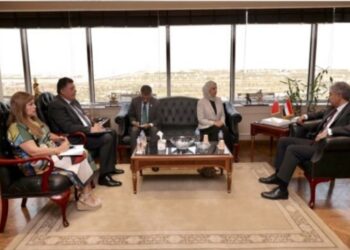
Delegations from the rival Palestinian factions Hamas and Fatah convened in Beijing yesterday for talks aimed at reconciliation. These discussions, hosted by the Chinese Foreign Ministry, underscore Beijing’s growing diplomatic influence in West Asia. Led by Moussa Abu Marzouk for Hamas and Azzam Al-Ahmad for Fatah, the discussions were sparked by China’s neutral stance in the region and its efforts to foster Palestinian unity.
The focus of the talks was to address the longstanding division within the Palestinian leadership, with key figures such as Khalil Al-Hayya and Hossam Badran from Hamas, and Samir Al-Rifai from Fatah, also participating. Despite low expectations for an immediate resolution, the timing coincides with US diplomatic movements in the region, as Secretary of State Antony Blinken was also in Beijing discussing broader US-Chinese relations.
Since Hamas took control of Gaza in 2007, causing a split with the Fatah-dominated Palestinian Authority (PA) in the West Bank, reconciliation has been elusive. China’s recent actions, including a call for a ceasefire in Gaza and advocacy for a two-state solution, demonstrate its careful but strategic diplomatic engagements in the area. Additionally, China has maintained contacts with both moderate and more radical elements within Palestinian politics, as seen during a regional tour by Chinese diplomat Wang Kejian.
This Beijing meeting comes amid broader discussions about the governance of post-war Gaza and the potential for Hamas to disarm and integrate more fully into the Palestinian political framework as part of a future peace process. These talks are a continuation of China’s diplomatic efforts following its mediation of the Saudi Arabia-Iran agreement in 2023, reflecting its balanced approach to West Asia’s conflicts.
China’s approach to the Israeli-Palestinian conflict is notably neutral, contrasting with the more direct and ideological support Israel receives from Washington and some European countries. This stance is in line with Beijing’s policy of non-interference and its broader strategy to position itself as a diplomatic alternative on the global stage.