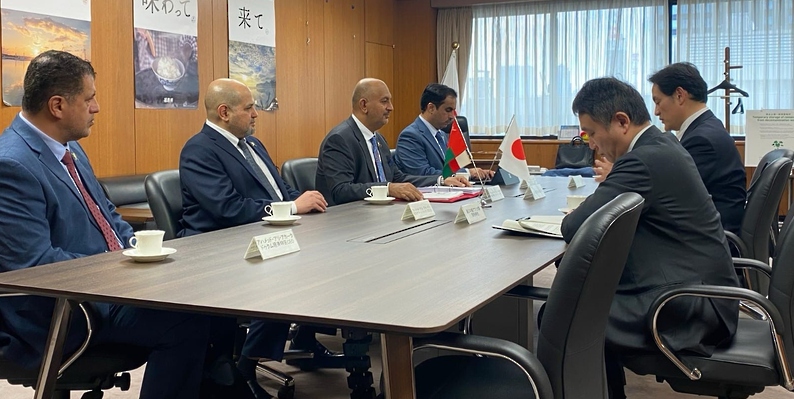
Oman and Japan have recently made significant strides in reviewing the implementation of projects within the sultanate’s economic and free zones.
According to the Times of Oman, Dr Ali bin Masoud Al Sunaidi, Chairman of the Public Authority for Special Economic Zones and Free Zones (OPAZ) held a meeting in Tokyo with Saito Ken, Japanese Minister of Economy, Trade and Industry.
The meeting highlighted several key projects, with particular attention given to a ground breaking low-carbon iron production project located in the Special Economic Zone at Duqm (SEZAD).
Oman’s economic development has been spotlighted in several analyses and reports, with a focus on boosting investment, infrastructure, and industrial growth across its special economic and free zones. These initiatives are closely aligned with Oman’s Vision 2040, aiming to diversify the economy and encourage sustainable development.
In particular, OPAZ in Oman has been active in promoting investment opportunities, overseeing large capital investments totalling billions in Omani Rials, and managing a growing number of operational companies within these zones. This includes a major emphasis on advanced transport infrastructure and digital logistics to enhance trade capabilities and efficiency.
Oman’s commitment is also evident in its pursuit of green technologies and renewable energy projects, in line with its goal to achieve a net-zero economy by 2050. Additionally, under its strategic Public-Private Partnership (PPP) initiative, Muscat plans to advance several projects across sectors like transport, health, and education in 2024, indicating a robust development agenda.
These efforts between Muscat and Tokyo underline the significant role that these zones play in attracting foreign direct investment and boosting economic growth, leveraging Oman’s strategic location and the strong, ongoing trade relations with East Asia.