The ongoing genocide of Palestinians in the Gaza Strip has forced the whole world to confront it in one way or the other, no matter how far removed they may be from the ordeal. Japan in East Asia is no different.
Japan has historically been a significant aid and development partner for the Palestinian Authority (PA), but has stopped short of recognising it as a sovereign state. The recent rise of pro-Palestinian sentiment among the Japanese student population has sparked self-reflection of its West Asia policies.
In a country devastated by a rapidly aging population, historically deep ties to Israel beg significant re-examination. How should Japan go about it?
Japan’s relations with West Asia
It’s no secret that Japan depends upon Saudi Arabia and the UAE for most of its oil. Both countries are responsible for supplying over 85 percent of crude oil used in Japan.
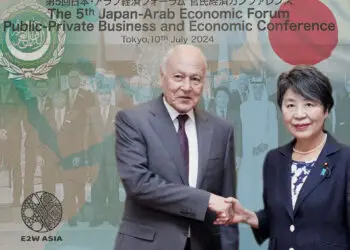
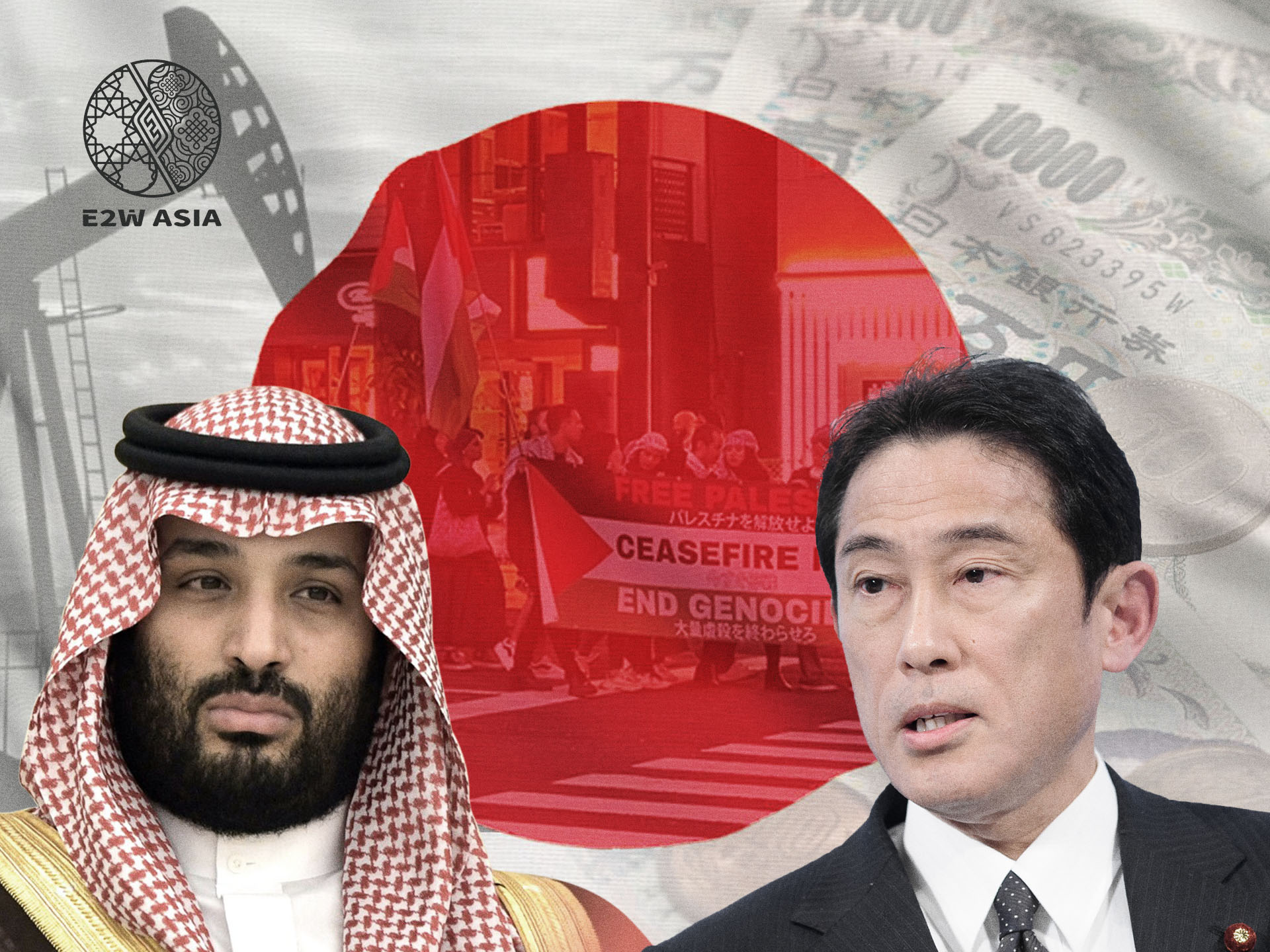
This is bound to be one of the key points of discussion when Saudi Crown Prince Mohammed bin Salman (MbS) eventually makes his official visit to Japan from 20 to 23 May.
Japanese Prime Minister Fumio Kishida has stated that over the course of three days, key bilateral topics would be discussed, including events in the West Asian region. Although further details have been kept secret, it may be reasonable to assume that the ongoing genocide operation by Tel Aviv could be a part of the discussions, along with Japan’s position on it.
While Japan is aligned with NATO on key geopolitical issues around the world along with keeping good relations with Israel, the country enjoys overwhelmingly favorable perceptions.
A 2019 opinion poll conducted by the Ministry of Foreign Affairs of Japan in Egypt, Tunisia, Jordan, Saudi Arabia, and the UAE revealed admiration for Japan’s role in advancing pacifism in the world, along with development aid to West Asian and North African countries.
Additionally, Japan has been a consistent advocate for a long lasting solution to Israeli occupation, advocating for an independent Palestinian state. Japan’s assistance amounts to 2.3 billion US dollars in total since 1993. This includes support for improving basic life infrastructure, support for socially vulnerable Palestinians, and direct state-building efforts.
This is combined with the Japanese initiative in the establishment of the Conference on Cooperation among East Asian Countries for Palestinian Development (CEAPAD) that has encouraged the Muslim-majority countries of South-East Asia to invest in Palestine for long-lasting change.
However, there is still room for new opportunities and initiatives.
The Japanese youth demands more
There has been a visible movement of support for the Palestinian cause among the youth of Japan. Protests were held on the streets of nuclear-struck Hiroshima and Tokyo where they have been around the PA’s embassy in the city.
The global university protests have also spread to Japanese universities such as the prestigious Tokyo University and at four other Japanese universities including Sophia University, Waseda University, Tama Art University, Hiroshima University and the Christian International University. Students demand that their universities cease their collaboration and links with Israeli universities.
Now, the forefathers of these Japanese students had historically not much say about the goings on of the whole wide world other than a few cases. With the increasing connectivity offered by the internet in recent years and the bridging of the language gap between Japan and the rest of the wider world, things have been changing.
The New Arab reports a Japanese student saying the following:
“We Japanese are sometimes isolated because of our language. Many people here are not fluent in English. This time, professional translators have been translating daily news into Japanese through social media. Their commitment was a game-changer which caught the attention of many youngsters.”
This indicates a shifting of perspectives in younger Japanese, many of whom also work in government and media. Grassroots-level concern for events such as war and genocide in far-flung parts of the world is starting to be shown.
It is interesting to note that in a recent event involving an arson attack at the UNRWA headquarters in East Jerusalem, Japanese Foreign Minister Yoko Kamikawa was the one to harshly condemn it. She criticized the occupation’s handling of the crime and stressed upon the importance of UNRWA in helping the Palestinians.
We are unlikely to see drastic changes in Japanese rhetoric towards its relations to Tel Aviv but we can expect them to continue to support Palestine as they have for so many years. But as the students have made it clear, Japan can do more.
West Asia and East Asia in lockstep?
In keeping with their foreign policy objectives of supporting the cause of Palestine, Saudi Arabia and UAE should reconsider their respective stances on normalisation of relations.
The success of the Gulf Cooperation Council (GCC) and recent inroads into deepening ties with China has shown that East-West cooperation can truly blossom into a mutually beneficial arrangement with high returns on investment.
In July 2023, Saudi Arabia and Japan exchanged 26 pre-signed economic agreements, setting the stage for strong trade ties. These agreements spanned sectors such as healthcare, clean energy, mining, and digital innovation, all of which are sectors marked by Saudi Arabia as needing key developments in the pursuit of economic diversification. They are also contributing on a long-term plan dubbed Vision 2030.
Saudi Investments Minister Khalid Al-Falih testified: “Our GDP is now 66 percent higher than when we launched the Vision 2030. Our foreign direct investment has also increased significantly by 120 percent.”
This is a rather powerful optimistic motivator for closer economic and technological cooperation between the premier powers of East and West Asia. But similar cooperation in geopolitical issues can bring the two poles even closer.
The crux of the argument for normalisation is economic and technological cooperation, but it seems MbS and many within the Saudi government have stayed away from fully joining hands with Tel Aviv as the UAE has done, in favor of more humanitarian alternatives.
On Japan’s part, the action of deepening these ties could come in the form of full recognition of the sovereignty of the State of Palestine and full backing for its bid for UN membership.
It may be too much to ask Japan to reverse its ties to Israel however, as it requires the assistance of the US in its defense against a hostile North Korean foreign policy.
Nevertheless, the simple act of furthering its recognition and support of the Palestinian peoples’ aspirations for statehood will not only increase West Asia’s favorable view of Japan even more, but it will also incentivise West Asian states to commit further to deepening their ties to East Asia instead of considering normalisation.
Palestine can close the gap
Japan’s initiative may convince South Korea, Taiwan, and the Philippines to follow suit and make all the more progress in connecting East and West Asia closer. Yet we must not forget that real world factors such as costs and time ultimately end up influencing geopolitical decisions that end up impacting the lives of millions.
Saudi Arabia and the UAE are not known for public advocacy or even a speck of a hint from common citizens that their governments may be doing something wrong. Perhaps international criticism could influence matters?
Indeed, a lot of countries have taken stances against the occupation based on public opinion, something that is sorely lacking in both Saudi Arabia and the UAE. This culture of impunity when it comes to taking foreign policy decisions must be exam