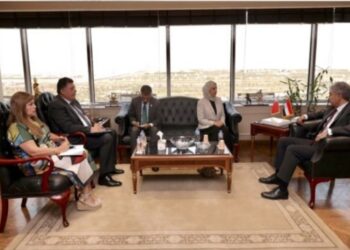
The 5th Japan-Arab Economic Forum wrapped up on the 11t July, 2024. This meeting had been a long time coming since the last Japan-Arab Economic Forum that was held back in 2016.
While trade and business relations between Japan and the Arab League began to blossom over the 2000s slowly, It nonetheless continued to fall short of the potential that could be reached. This is especially true with Arab League members such as Jordan, Algeria, and Tunisia.
In the 2020s though, the world is changing.
The members of the Arab League must reach out to form better connections with a historically estranged East Asia.
What are the outcomes of this meeting?
Key agreements
It would be prudent to note straight away that any observations or supposed agreements made between Japanese and Arab representatives at the meeting are non-binding. Nevertheless, it still provides a glimpse into where future relations are headed.
It’s hard to pass up a chance for more commerce, bringing with it new opportunities. It applies to everyone regardless of their views, beliefs, prejudices or otherwise.
The Secretary General of the Arab League Ahmed Aboul Gheit has been noted as the one to assert himself and place his ideas forward. He emphasised partnerships in education, energy transition, digital technology, health, and artificial intelligence.
These were put forward with the idea that private companies with their investments would be the ones to carry it forth.
Since it was held at the ministerial level, the first day of the meeting also carried forward with comprehensive agreements on critical issues such as energy security and state-level cooperation on sustainable development goals (SDGs).
In general, investors from both sides were encouraged to take a deep interest in each market. There is a distinct potential for Arab League food and nutrition enterprises to make inroads into the Japanese markets. Alamarai and Savola Group are just some of the enterprises that could make inroads, owing to their high valuations.
But these possibilities were simply one side of the agenda.
The question of Palestine
This edition of the Japan-Arab Economic Forum will be noted in history as the first to involve political issues as a key agenda. Arab representatives strongly leaned on the Japanese to modify their stance on the Palestinian struggle against Israel.
Japan and Israel have historically been very close since the 1950s. Indeed, both countries have also been proactive in reaching out to each other on their own initiative, leading to a deep-rooted history of cooperation.
On a diplomatic level, Japan recognizes the Palestinian Authority but does not recognize it as a legitimate state. Japan has also been forthcoming with all sorts of aid, notably govern to government aid in administrative efforts.
These are the things that have a permanent impact on building the capabilities of a Palestinian government when it comes to structuring itself as a state to serve its citizens. Thus, this is the springboard from which Japan-Arab relations have had a potential to blossom.
Ahmed Aboul Geit has spent a sizeable amount of time talking about the struggles of the Palestinian Authority government and the deadly situation that innocent Palestinians continue to face from Israel. He has emphasised specifically that recognition of the State of Palestine was necessary for lasting peace, and has called on Japan to play a crucial role in it.
However, this is the most that Arab League members have decided to take the issue with its overseas partners.
With a more rigid and harsh approach, they do not wish to alienate Japanese investors. Diversification of their respective economies has become key to their 21st-century national strategies going forward.
Then again, business-level cooperation or the inflow of more aid to the Palestinian cause from Japanese entities may be expected in the future. It depends on the directions that Japanese officials and businesspeople pull towards.
A roadmap to greater cooperation
Successfully completed forums such as these are what help bridge the gap between two parties that are as distant as could be possible.
The Japanese participants had proven to be quite receptive to the new ideas, with institutional actors such as the Japan International Cooperation Agency (JICA) playing a role in organizing the event.
However, what would truly make the Arab side feel that they have an understanding of the Japanese would be a uniform opinion on international issues.
Chiefly, of course, Palestine is a large part of it.
This is where Japan may still insist on drawing the line as long as the country gains more from its strategic partnership with Israel in relation to its ties with South Korea and the United States. Moreover, Japan and Israel cooperate on military matters, and military matters are always connected to decisions or strategies regarding national security.
To overcome that is a pipedream. Furthermore, China and Japan are at extreme odds geopolitically. China is set to be the more receptive and workable partner in the long run, especially because they are on the same page as the Arab League politically.
But nothing is achieved without trying in gradual increments.
At the very least, these meetings do the work of increasing the understanding between the two parties. Again, East Asia has been largely estranged from West Asia in recent years. A common cultural understanding to ensure closer cooperation can only be achieved slowly.
Building momentum
The event has laid the groundwork for the 6th Japan-Arab Economic Forum to be conceptualized ahead of time in 2026. It is expected to be hosted by one of the Arab League member states.
Only through constant and consistent dialogue can new opportunities be explored in the mission to bring Japan and the Arab League together. For now, this event will remain a mere stepping stone to greener pastures.
The potential for both sides to gain is limitless, not only based on the economic weight that Gulf Arab countries carry themselves with but also when it comes to North Africa. The North African region still remains ripe for exploration by Japanese efforts.
Perhaps the 5th Japan-Arab Economic Forum will carry this forward to its next iteration.