China as a key player in international diplomacy has a growing profile in conflict resolution in West Asia. Its track record includes facilitating dialogue between Saudi Arabia and Iran, demonstrating Beijing’s capability and willingness to mediate in protracted regional conflicts.
By recognising the de facto, Ansarallah (“Houthi”)-led government in Yemen, China will align itself with a pragmatic approach that it previously applied in Afghanistan by establishing relations with the Taliban. Unlike the West, China’s commitment to engage with groups that hold de-facto power, contributes to a more realistic and sustainable solution.
The Sanaa government and regional legitimacy
The Ansarallah-led government in Yemen, though not internationally recognised, controls significant territories and administrative functions. The recognition by China can be seen as an acknowledgment of the on-the-ground realities in Yemen, contrasting sharply with the nominal authority of the Saudi-backed, internationally recognised government based in Aden.
This latter government, currently headed by the Presidential Leadership Council (PLC) has often been criticised as lacking genuine autonomy and being heavily influenced by external powers, notably Saudi Arabia, making it arguably a puppet regime with questionable legitimacy.
The National Salvation Government (NSG) was formed by the Ansarallah movement and its political allies in Sanaa in November, 2016, just over two years after the 21 September Revolution of 2014 with the aim of governing areas under their control.
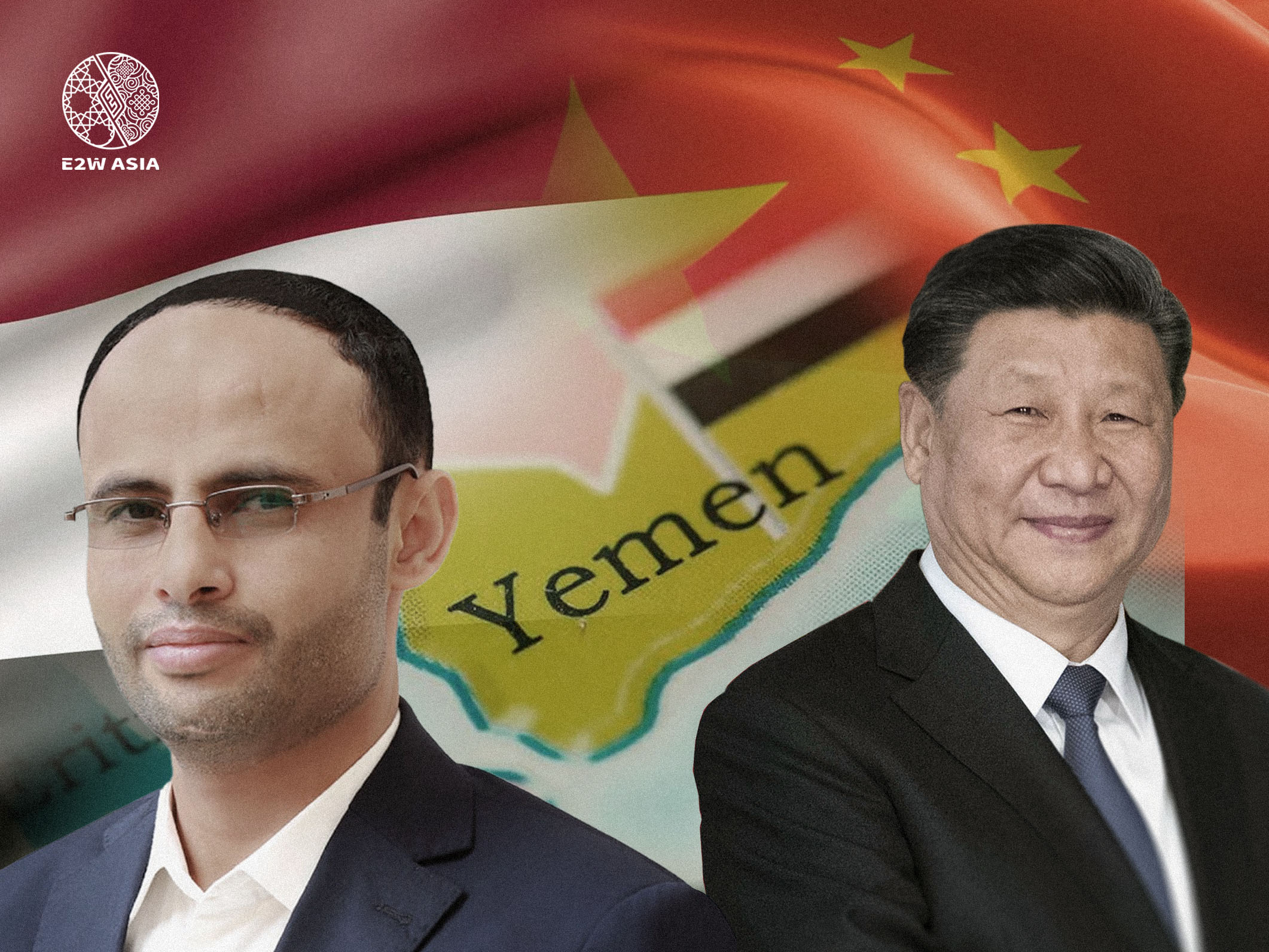
It was led by Abdel-Aziz bin Habtour, a former governor of Aden. The NSG, which governed most of Yemen’s densely populated regions (around 80 percent of the population), was disbanded in September 2023, although established alongside the NSG, the Supreme Political Council (SPC), under President Mahdi Al-Mashat continues to play a significant role acting as the de facto executive authority in areas under Sanaa’s control.
It is important to mention that the Republic of Yemen (North Yemen) and the People’s Democratic Republic of China (PRC) established diplomatic relations in 1956. This made Yemen the first country on the Arabian Peninsula to acknowledge the PRC as the legitimate representative of China.
In the long run, it could be beneficial for Beijing to reciprocate by recognising a fellow revolutionary state, just as Sanaa previously recognised China.
Impact on the war in Yemen and Red Sea stability
China’s potential diplomatic steps could have profound implications for the devastating nine-year war Yemen. By recognising the Ansarallah government, Beijing could pressure Saudi Arabia to reconsider its support for the rival government in Aden, which has been further complicated by tensions with the UAE-backed Southern Transitional Council (STC). This shift could pave the way for a more inclusive dialogue involving all major stakeholders, potentially leading to a peaceful settlement.
Four years ago, I-wei Jennifer Chang, Research Fellow at the Global Taiwan Institute in Washington, DC told TRT World that “The Chinese would like to see peace and stability restored in Yemen so that Chinese companies could resume pre-2011 investments and trade and potentially play major roles in Yemen’s post-war reconstruction.”
“The Chinese would also like Yemen to be stable in order to make Yemen play a more economically active role in Beijing’s Belt and Road Initiative,” she added.
From an economic perspective, the local currency, the Yemeni riyal is more stabilised in areas under the control of the SPC, including Sanaa, while in the southern and eastern provinces, governed by the Saudi-backed government, it continues to depreciate. The recent introduction of a 100 riyal minted coin by the Central Bank in Sanaa is likely to have also had an impact.
Beijing’s inroads with Saudi and Iranian relations could also have a promising impact on Oman-brokered talks between Riyadh and Sanaa.
Israel’s ongoing genocide in Gaza has also had significant repercussions for regional stability, particularly in the Red Sea, a vital corridor for international shipping. Sanaa’s naval operations against Israel-linked vessels have been a major cause for concern for western allies of Israel.
In light of the war on Gaza, and China’s continued calls for a lasting ceasefire, it is notable that a prominent member of the SPC, Muhammad Ali Al-Houthi, said in January: “We reaffirm that the military operations carried out by the Yemeni armed forces in the Red and Arabian Sea are consistent with what China calls for.”
As such, China’s recognition of the Sanaa government could help stabilise these operations, thereby securing a safer maritime environment which is crucial for international trade and security.
The need for an honest broker
The failure of the US-led coalition to halt the Ansarallah-aligned navy’s maritime operations have seen the US acknowledging the necessity of a diplomatic solution in Yemen. Reports, such as those from The Cradle, suggest that US officials have considered recognising the Sanaa government, indicating a potential shift in policy. However, this is contingent on Yemen ending its operations in support of Palestine, which Ansarallah leader Abdul Malik Al-Houthi has insisted would continue until the genocide ends.
The US is often viewed as a compromised mediator due to its previous support of the Saudi-led coalition in Yemen and its pro-Israel stance. In contrast, China is perceived as a more neutral and credible partner in West Asia, capable of facilitating genuine dialogue without the baggage of direct involvement in the conflict nor ideological affiliations in support of Zionism.
China’s recognition of the SPC in Sanaa could serve as a catalyst for peace in Yemen. It aligns with Beijing’s broader strategic interests in promoting stability and securing its economic and geopolitical interests in West Asia and the Red Sea region. Moreover, this recognition could lead to other states to re-evaluate their positions, potentially leading to a more balanced approach to Yemeni affairs and reducing external influences that have fuelled the war.
By positioning itself as a neutral mediator capable of engaging with all parties, China enhances its role as a key diplomatic player in West Asia, contributing positively towards regional stability and peace. This move not only supports the prospects for peace in Yemen but also strengthens China’s position as a responsible major power in international relations.